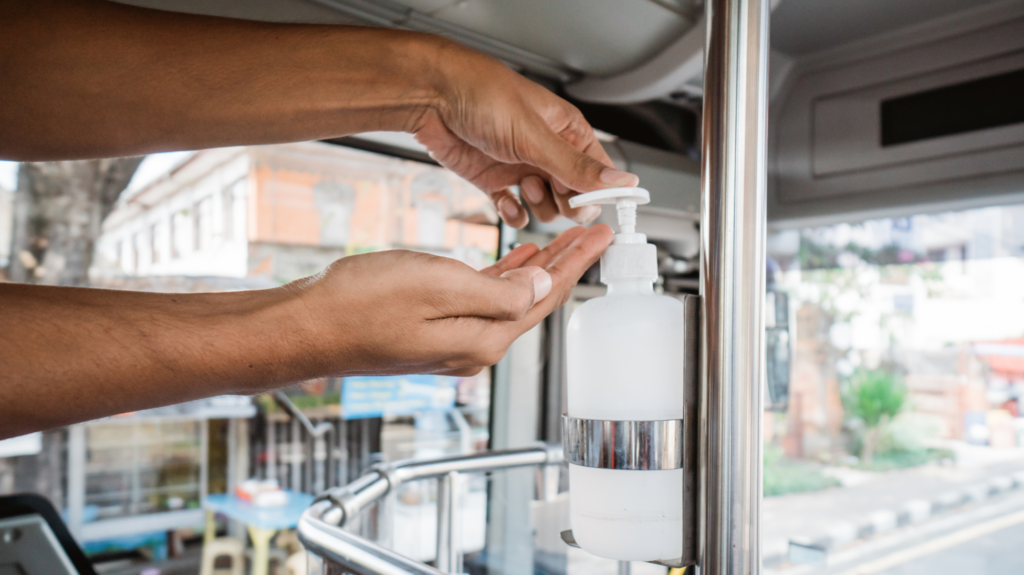
Using public transport is a daily reality for millions worldwide. Buses, trains, and jeepneys offer convenient and eco-friendly ways to get around, but they also increase your exposure to germs and viruses. With countless hands touching the same poles, seats, and buttons every day, maintaining good hand hygiene while commuting is crucial to staying healthy.
Why is Hand Hygiene Important on Public Transport?
Public transport vehicles are often crowded and enclosed, making it easy for infections to spread. Surfaces like handrails, ticket machines, door handles, and seatbacks are touched by many people, increasing the chances that harmful bacteria and viruses linger.
Through your hands germs travel from surfaces to your face — especially your mouth, nose, and eyes — where they can enter your body and cause illnesses like the flu or common cold.
Good hand hygiene reduces the risk of picking up or transmitting these germs, protecting you and those around you. If you have any symptoms or concerns, don’t hesitate to reach out to health care providers near me to get professional advice and care.
Tips to Maintain Hand Hygiene on Public Transport
Here are some simple yet effective ways to keep your hands clean and reduce your risk of infection while using public transport:
1. Wash Your Hands Regularly
Whenever possible, wash your hands with soap and water for at least 20 seconds. Public restrooms at stations or terminals are good opportunities to clean your hands thoroughly. If you don’t have access to soap and water, hand sanitizer is the next best thing.
2. Carry Hand Sanitizer
Carry a small bottle of hand sanitizer with at least 60% alcohol, and use it after touching frequently handled surfaces like handrails, ticket machines, and door handles. Remember, hand sanitizer works best on hands that are not visibly dirty or greasy.
3. Avoid Touching Your Face
Try not to touch your eyes, nose, and mouth while commuting. Germs on your hands can easily enter your body through these sensitive areas, increasing your chances of getting sick. If you need to touch your face, use a tissue or a clean part of your clothing.
4. Practice Respiratory Hygiene
Cover your coughs and sneezes with a tissue or your elbow, and clean your hands afterward. This helps prevent the spread of germs to surfaces or other people.
5. Keep Your Personal Items Clean
Your belongings — like your phone, wallet, or bag — can also carry germs. Clean your phone regularly with disinfectant wipes made for electronics, and avoid placing bags on floors or seats where they pick up dirt and bacteria.
6. Wear Gloves with Caution
While some people wear disposable gloves during their commute, gloves can become contaminated just like hands. If you choose to wear gloves, avoid touching your face and change them often. Ultimately, washing your hands remains the best defense.
7. Maintain Physical Distance
When possible, keep some distance from others to minimize the risk of airborne and surface transmission of germs. This is especially important during peak hours when vehicles are crowded.
When to See Your Primary Health Care Provider
Even with all precautions, if you feel unwell or notice symptoms such as fever, cough, or fatigue after using public transport, it’s important to consult your primary health care provider. They can offer guidance on managing symptoms and help you get the care you need promptly.
Finding health care providers near me is easier than ever, with many clinics offering telehealth services that allow you to get medical advice without leaving home.
Public transport keeps cities moving and communities connected. While you can’t control who else is on your bus or train, you can control how well you protect yourself. Prioritizing hand hygiene is a simple but powerful way to stay healthy and prevent the spread of infections.
Wash or sanitize your hands regularly, avoid touching your face, and be mindful of the surfaces you contact. If you have concerns about your health, reach out to health care providers near me or your primary health care provider for support.
By following these tips, you’ll reduce your risk of catching or spreading germs, making your commute safer for you and those around you.
Stay safe and healthy on your next ride!
Need Support? Contact MCMI Today

If you want expert advice on maintaining your health or need to consult a trusted primary health care provider, Medical Case Management International (MCMI) is here to help. Whether you’re dealing with concerns related to public transport exposure or just want to stay proactive about your wellness, our team of experienced health care providers is ready to support you.
Visit MCMI today to find the care you deserve — because your health matters every step of the way.
Leave a comment
Sign in to post your comment or sign-up if you don't have any account.